

Moving Into a New Home: A Practical Guide to a Smooth Move
Last Updated: November 1, 2026
Quick Summary
Moving into a new home works best when you follow a clear order: book help and purge first, pack essentials last, and confirm every detail before the truck pulls up. Start your checklist about two weeks ahead of the date, labeling every box by room and contents. Pack an open-first box last so it comes off the truck first.
- Book movers or a truck two weeks out, and get a written estimate and references before signing.
- Pack one room fully before starting the next, and wrap plates vertically like records.
- Your open-first box should hold bedding, toiletries, chargers, medication, snacks, and a kettle.
- Set up rooms in priority order: bedrooms and bathrooms on night one, kitchen on day two.
- Photograph every room and note existing damage on day one to protect your deposit.
Table of Contents
- Your Moving Into a New Home Checklist: What to Do Before the Truck Arrives
- Packing Tips for Moving House That Save Time and Breakage
- First Night in a New Home Essentials: What to Pack in the Open-First Box
- Budget-Friendly Furniture for a New Home: How to Furnish Without Overpaying
- Address Changes, Utilities, and Digital Safety After You Move
- Plan Your Furniture Delivery Before Move-In Day
- Frequently Asked Questions
Your Moving Into a New Home Checklist: What to Do Before the Truck Arrives
Moving into a new home works best when you follow a clear order: book help and purge first, pack essentials last, and confirm every detail before the truck pulls up. A move goes more smoothly when the checklist runs two weeks ahead of the date. Below, we'll show you exactly how to sequence it.
Two Weeks Out: Book, Purge, and Confirm
Start with the phone calls and the sorting, not the boxes.
- Book your movers or truck now, then confirm in writing. Competition Bureau guidance on choosing a mover recommends getting a written estimate and checking references before you sign.
- Purge room by room. Sell, donate, or recycle anything you won't take.
- Confirm your move-in date and building rules. Book the elevator if you're in a condo.
A common mistake is leaving the purge until the night before. You end up paying to move things you'll throw out a week later.
Moving Week: Pack the Essentials Box and Label Boxes
Pack the essentials box first, then label every box by room and contents.
- Label boxes on the top and side with room and a short contents list.
- Keep fragile items in their own clearly marked boxes.
- Pack a separate open-first box for night one.
Watch out: unlabeled boxes are the number one cause of a chaotic first week. You'll dig through five cartons to find a phone charger.
Packing Tips for Moving House That Save Time and Breakage
A practical packing approach is to pack one room fully before starting the next, and to use suitable materials for fragile items.
Gather packing materials early: sturdy moving boxes in a few sizes, bubble wrap, packing paper, tape, and markers. Cheap boxes collapse, and that's how breakage happens.
- Wrap plates vertically, like records, not stacked flat.
- Fill gaps in boxes with paper so items can't shift in transport.
- Keep screws and hardware in a labeled bag taped to the furniture.
Numbering each box and keeping a simple list on your phone helps you track what you have.
First Night in a New Home Essentials: What to Pack in the Open-First Box
The first night in a new home essentials list covers sleep, cleanliness, and connection: bedding, toiletries, chargers, medication, snacks, and a kettle. Pack this box last so it's the first thing off the truck.
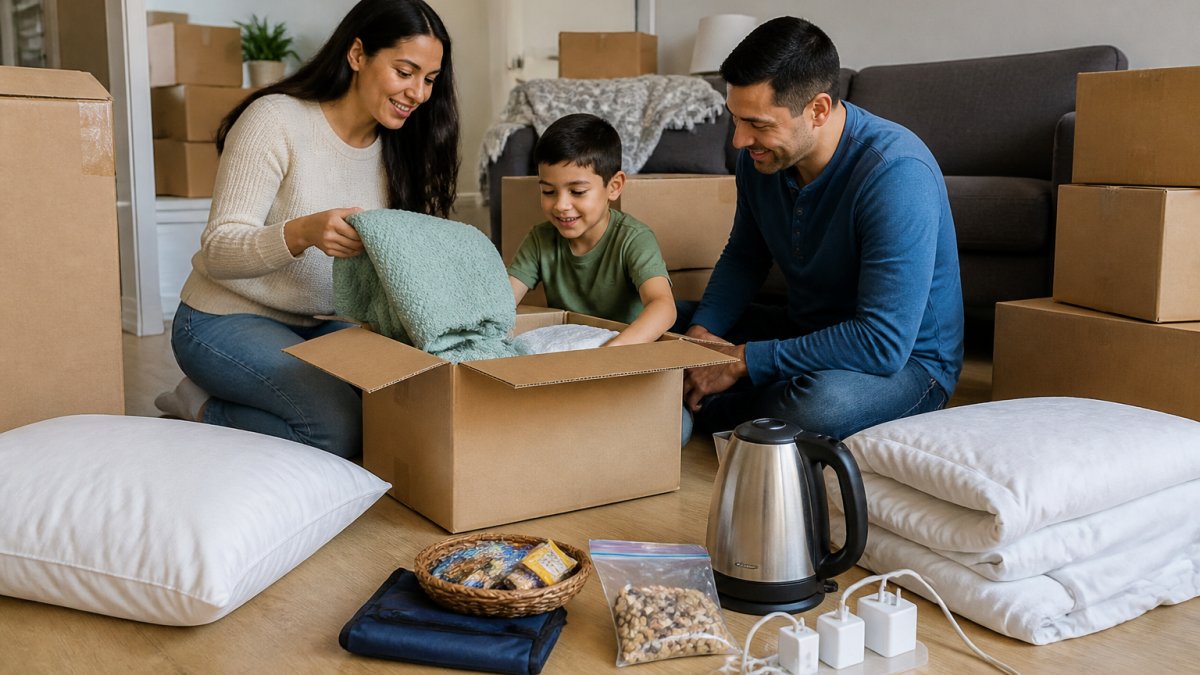
Your open-first box should hold:
- Bedding for every bed, plus pillows.
- Toiletries, towels, and toilet paper.
- Phone chargers and a power bar.
A Room-by-Room First-Week Setup Plan
Set up the home in priority order, not room order.
- Night one: bedrooms and bathrooms.
- Day two: kitchen and a working internet connection.
- Day three: living room seating and lighting.
- Day four: laundry and storage.
- Day five: remaining rooms and wall decor.
This sequence keeps daily life running while the rest comes together.
Move-In Condition Documentation and Renter Protections
Document the home's condition on day one, before furniture arrives. Photograph every room, note existing damage, and email the dated photos to your landlord if you rent. This protects your deposit and gives you a record for any home inspection. Keep utility meter readings too.
Budget-Friendly Furniture for a New Home: How to Furnish Without Overpaying
Budget-friendly furniture for a new home means buying the pieces you use daily first, and spreading the rest over several months. Furnishing an entire place at once is where budgets break.
- Buy the bed and sofa first. Everything else can wait.
- Measure every room and doorway before ordering.
- Choose durable fabrics and finishes for rentals.
Furniture Depot offers free delivery on orders over $499 in the GTA, no-payment, no-interest financing, and a price guarantee. Pricing depends on the pieces and delivery details, so check our website for current prices.
| Priority | What to Buy First | Why It Matters |
|---|---|---|
| 1 | Bed and mattress | Sleep on night one |
| 2 | Sofa and seating | A place to rest and eat |
| 3 | Dining table | Daily meals and work |
| 4 | Storage and shelving | Clears box clutter |
| 5 | Decor and accents | Finishes the look |
Address Changes, Utilities, and Digital Safety After You Move
Handle address updates and utility transfers before moving day, and treat your personal data as carefully as your boxes. The order matters: confirm service start dates first, then redirect mail, then update records that depend on your new address.
Utilities: Book Start Dates Before You Pack
- Contact electricity, water, gas, and internet providers at least two weeks out and set the new service to begin on your move-in date, not the day after.
- Ask each provider whether a final meter reading is required at the old address and whether a deposit or connection fee applies.
- Confirm whether the new home's previous occupant has canceled their service; overlapping accounts can delay activation.
Mail Forwarding and Address Records
Canada Post's mail forwarding service lets you redirect mail for a set period while you update records. Start forwarding a few days before the move so nothing slips through the gap.
Update these in roughly this order:
- Government services and identification (driver's licence, health card, vehicle registration).
- Bank, credit cards, and insurer.
- Employer and payroll.
- Subscriptions, streaming, and shopping accounts.
- Canada Revenue Agency and any benefits tied to your address.
Digital Safety: Protect Your Identity During the Transition
Forwarded mail can expose personal details, and a move is a common window for identity theft because records are in flux.
- Shred old documents that show your previous address rather than recycling them.
- Change passwords on accounts tied to your old address, and enable two-factor authentication where offered.
- Watch for mail addressed to previous occupants; return it to sender rather than opening it.
Renter and Owner Protections
If you rent, email your landlord dated photos of every room and note existing damage before furniture arrives. This protects your deposit and gives you a record for any inspection. If you own, file the same documentation with your home insurer and keep meter readings for your first utility bill.
Plan Your Furniture Delivery Before Move-In Day
Schedule furniture delivery for after the truck, not the same morning. You need clear floor space and confirmed access before new pieces arrive.
Book Delivery With the Right Details
- Confirm the delivery window and whether it includes in-unit placement or curbside drop only.
- Ask whether the team will remove packaging and whether assembly is included.
- Measure doorways, stairwells, and elevator dimensions against the furniture before ordering.
Contingency Planning for Delays and Problems
A move rarely goes exactly to plan. Build a fallback for each of these before move-in day:
- Delayed movers or delivery: keep an essentials box and an air mattress or camp bedding so the first night still works.
- Utilities not active: confirm a backup for internet and power, and keep phone chargers and a power bar in the open-first box.
- Damaged belongings: photograph everything before the truck leaves and note damage on the delivery slip before signing.
Get delivery booked early, confirm the access details in writing, and keep a fallback plan for the first 48 hours.
Frequently Asked Questions
What should you do first when moving into a new home?
Before unpacking, walk through the property and document its condition with dated photos, then check that utilities are connected and exterior door locks are changed. Set up the essentials box with bedding, toiletries, chargers, and a few snacks so the first night is comfortable. After that, focus on the kitchen and bathroom so daily routines work while you unpack the rest room by room.
What are the first night in a new home essentials I should pack separately?
Pack a clearly labeled open-first box with bedding for each bed, towels, toiletries, a phone charger, basic cleaning supplies, paper towels, and a few easy meals or snacks. Include a small toolkit, scissors, and a change of clothes. Keep this box in your car rather than the moving truck so it is available the moment you arrive, even if the truck is delayed.
How can I furnish a new home on a budget without sacrificing quality?
Prioritize the rooms you use daily, like the bedroom and living room, and delay decorative pieces. Look for a retailer with a price guarantee and flexible financing so you can spread costs without interest. Measure each room before ordering, choose durable materials for high-traffic pieces, and ask about delivery thresholds so shipping does not add to your moving expenses.
When should I change my address and set up utilities?
Start utility transfers and address updates at least one to two weeks before your move-in date. Contact electricity, water, and internet providers to schedule connection for the day you take possession, and set up mail forwarding through Canada Post. Update your bank, employer, insurer, and subscription accounts after you move, and use a unique password for each new account to reduce digital risk.
Moving into a new home is a test of planning, and furniture is where most budgets and timelines wobble. Furniture Depot is proudly Canadian and family-owned, and we make furnishing each room simple with free delivery on orders over $499 in the GTA, no-payment no-interest financing, and a price guarantee. Get started with Furniture Depot and build a home you love, one room at a time.


