

How to Verify Furniture Quality Online Before You Buy
Last Updated: November 12, 2026
Quick Summary
To verify furniture quality online, examine close-up listing photos of joints, stitching, and hardware, then confirm frame material, joinery, cushion specs, and weight capacity in the description. Read recent verified reviews, warranty exclusions, and return terms as evidence, and score each listing against a fixed checklist before ordering.
- Close-up photos should show corner joins, stitching, grain, hardware, and the underside.
- Solid hardwood frames are high strength; particleboard is low and cracks under stress.
- Dovetail and mortise-and-tenon joints hold; metal hardware outlasts plastic.
- Read the last 20 to 30 recent reviews and count recurring complaints, not single ones.
- A listing scoring 16 or higher on a 20-point check gives enough to verify.
Table of Contents
- Start With the Product Photos and Specs
- Durable Living Room Furniture Materials and Frame Construction
- Solid Wood vs Particle Board Furniture: Telling Them Apart Online
- How to Tell if a Sofa Is High Quality from Its Listing
- Verify Claims with Reviews, Warranties, and Return Policies
- Scoring a Product Page Before You Order from Furniture Depot
- Frequently Asked Questions
Start With the Product Photos and Specs
Learning how to verify furniture quality online starts with the listing itself. Photos and specs tell you more than marketing copy.
Here is what to look for before you order.
Start with the images. A good listing shows the piece from several angles, not one styled shot.
What Close-Up Images Should Show
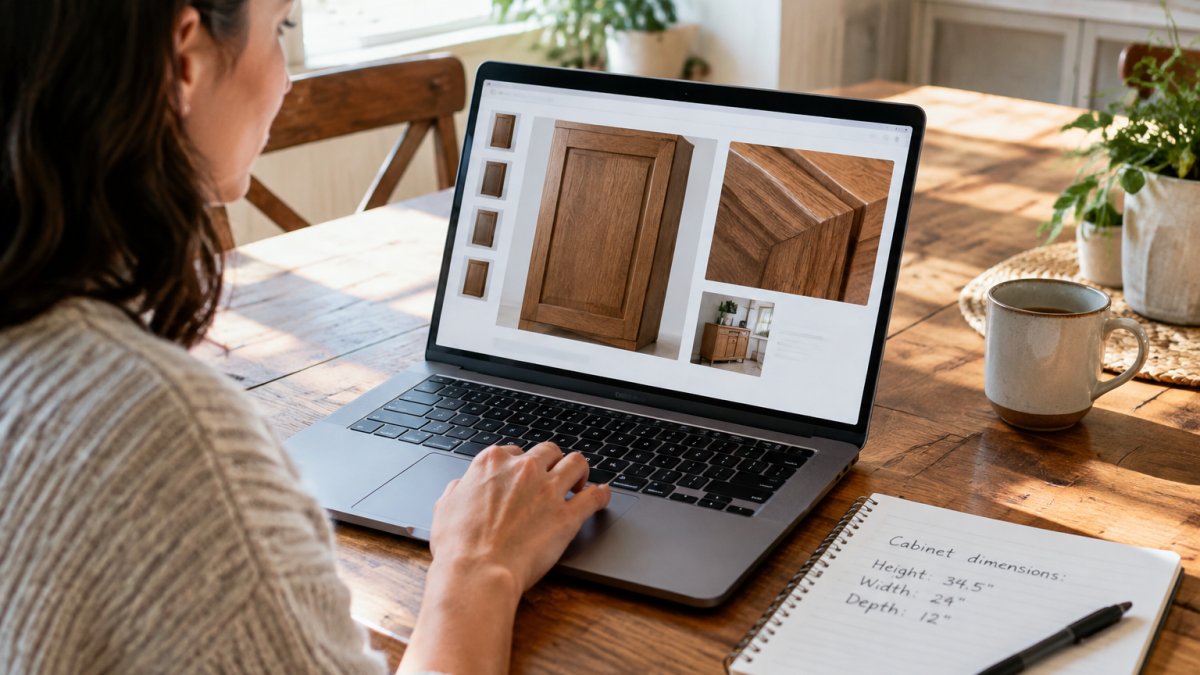
Close-up photos are your best tool for checking furniture quality before you buy. Look for shots of corners, joints, and fabric.
A quality listing will show you:
- Corner joins where two pieces of wood meet
- Stitching along seams and cushion edges
- Grain patterns on wood surfaces
If every photo is a wide shot from the same angle, ask why. Sellers hide weak spots by keeping the camera far away.
Reading Dimensions and Weight Capacity
Specs are where a listing gets honest or vague. Check stated dimensions against your room first.
Measure your doorway and stairwell too. A sofa that fits the wall may not fit through the door.
Weight matters too. A heavier piece usually means more solid materials.
Look for a stated weight capacity on seating. If the listing skips it, that is a warning sign.
Durable Living Room Furniture Materials and Frame Construction
Durable living room furniture materials come down to the frame and the joints. Get these right and the piece will last; get them wrong and no fabric will save it.
A solid hardwood frame holds its shape for years. A softwood or composite frame may flex and squeak within months.
Here is how common frame materials compare:
| Material | Strength | Typical Use | Watch For |
|---|---|---|---|
| Solid hardwood | High | Better frames | Rarely stated by budget sellers |
| Plywood | Medium to high | Mid-range frames | Hidden under upholstery |
| Particleboard | Low | Budget pieces | Cracks under stress |
| MDF | Medium | Panels and backs | Swells if wet |
Ask what the frame is made of before you buy. A seller who cannot tell you is a seller to skip.
Joinery and Hardware to Look For
Joinery is how the pieces of a frame lock together. Strong joints hold. Weak joints loosen.
Look for these in photos and descriptions:
- Dovetail joints interlock like fingers and resist pulling apart
- Mortise-and-tenon joints slot wood into wood for a tight hold
- Corner blocks brace the frame at stress points
Hardware should be metal, not plastic. Metal glides, hinges, and brackets last longer and feel sturdier.
A common mistake is trusting the word "solid" in a listing. It often describes the look, not the build.
Solid Wood vs Particle Board Furniture: Telling Them Apart Online
Solid wood vs particle board furniture is the biggest quality split in online buying. Solid wood is cut from one piece of timber; particle board is wood chips glued and pressed together.
Solid wood can be sanded and refinished. Particle board cannot, once it swells or chips, it stays that way.
You can usually tell them apart from the listing:
- Grain on solid wood repeats and continues across edges
- Veneer shows a thin top layer over a different core
- Edges on particle board look uniform and flat
How to Distinguish Solid Wood from Veneer
Veneer is a thin slice of real wood glued over a cheaper core.
Check the edges. Solid wood shows end grain; veneer shows a thin line where the top layer meets the core.
Look at the description for words like "veneer," "engineered wood," or "wood solids." Honest listings name them.
Our Jupiter Living Room Collection shows how a listing can spell out its construction clearly, so you know what you are buying.

How to Tell if a Sofa Is High Quality from Its Listing
How to tell if a sofa is high quality comes down to three details: the cushions, the suspension, and the stitching.
A sofa is only as good as what is inside it. The frame matters, but the seat is where you spend your time.
Cushion Filling, Suspension, and Stitching
High-density foam keeps its shape; low-density foam flattens fast.
Look for these in the description:
- Foam density stated in numbers, not just "high density"
- Suspension like sinuous springs or webbing under the seat
- Stitching that runs straight and tight along seams
A sofa with firm foam and spring support will feel supportive. One with soft foam and no springs will sag.
Check the seams in close-up photos. Loose or wavy stitching is a sign of rushed work.
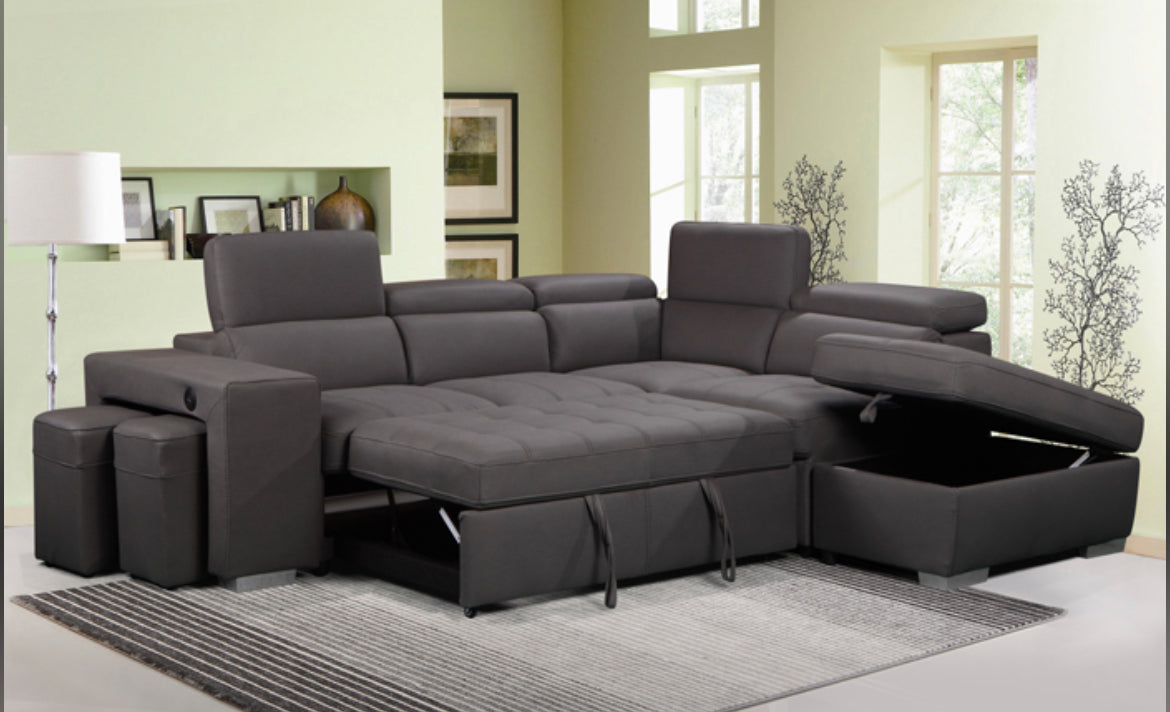
You can see these details in practice on our Pasadena sleeper sectional with storage ottoman, where the listing shows the frame, cushions, and finish up close.
Verify Claims with Reviews, Warranties, and Return Policies
To verify furniture quality online, treat reviews, warranties, and return policies as evidence you can test, not as reassurance. Each tells you something the photos cannot, but only if you read them systematically.
Read Reviews Like a Researcher, Not a Shopper
Star ratings alone are close to useless. A 4.3 average can hide a pattern of cracked frames or a wave of launch-week five-star reviews.
Start with volume and recency.
Filter for verified purchases where offered.
Look for buyer photos. They show the piece in real rooms under real light, often more honest than studio shots.
Count recurring complaints rather than reacting to any single one.
Assess the Warranty as a Document, Not a Badge
A warranty is only as good as its exclusions. A "10-year warranty" means little if cushions, fabric, and finish are covered for one year, or if you must ship a sofa back at your own cost.
Read the warranty text before checkout and answer four questions:
- What is covered? Frames, springs, cushions, fabric, and finish are often covered for different lengths. Note each one.
- What voids it? Common exclusions include normal wear, fading, stains, pet damage, and use beyond a stated weight capacity. If the listing does not state a weight capacity but the warranty excludes overload, that is a gap you cannot verify.
- Who performs the repair? Some warranties replace parts; others require you to arrange and pay for labor. Ask which.
If the warranty is not published on the product page, request it in writing through chat or email before you order.
Price the Return Risk Before You Check Out
Return policies protect you when a piece arrives damaged, wrong, or simply not right for the room.
Check these terms:
- Return window length, and whether it starts at order date or delivery date
- Who pays return shipping, and whether the item must go back in original packaging
- Restocking fees, which are common on large items and can be a percentage of the purchase price
Delivery risk belongs in this calculation. For condos and walk-ups, confirm whether the carrier brings the piece inside, whether stairs are included, and whether a failed delivery due to access results in a fee.
A practical rule: add the potential return cost to the purchase price in your head before you decide.
Scoring a Product Page Before You Order from Furniture Depot
Scoring a product page turns a gut feeling into a decision you can compare across products. The goal is not a perfect listing; it is to see which listings give you enough verifiable information to buy with confidence.
Use a Simple Point System
Give each listing points across the checks below, then compare totals.
- Close-up photos of joints, seams, hardware, and the underside (2 points)
- Frame material named specifically, not just "wood" (2 points)
- Joinery type described or shown (2 points)
Score each product the same way and keep the scores side by side. For help planning your budget and priorities, see How to Furnish a Condo on a Budget: A Room-by-Room Plan.
Do not award points for vague language. "Premium materials," "solid construction," and "built to last" are marketing phrases, not specifications, and they should score zero on the material and joinery checks.
Use Online-Only Tools to Fill the Gaps
You cannot touch the furniture through a screen, but you can use the tools a listing offers to get closer.
-
Ask for a video. A short video showing the piece from several angles, opening drawers, or pressing on a cushion reveals more about construction and firmness than a dozen styled photos.
-
Check the care instructions. A listing that publishes care instructions has thought about how the piece will age. A listing that does not may not have them.
Separate Verifiable Claims from Marketing Language
A claim is verifiable when it names a material, a measurement, a standard, or a document you can request.
Ask for documentation when a claim matters to you: material specifications, construction details, warranty text, and care instructions.
Aim for a strong score across the board, and treat missing information as a cost.
Buying furniture online should not feel like a gamble.
Frequently Asked Questions
What materials indicate high-quality furniture?
Look for solid hardwood frames, plywood panels, and real wood veneers over engineered cores. Solid wood and plywood hold screws and resist warping better than particleboard. In upholstery, high-resilience foam and tight, even stitching signal better construction. Listings that name specific materials give you more to check than vague claims like 'premium wood.'
How can I tell if a sofa frame is durable online?
Read the listing for frame material and joinery details. A durable sofa frame is usually kiln-dried hardwood, with corner blocks and reinforced joints rather than staples alone. Check the weight and dimensions too: a solid frame adds weight. Look for close-up photos of the frame or underside if offered, and scan reviews for mentions of squeaks, wobbling, or flex within the first year.
Are online furniture reviews reliable for judging quality?
They can be, if you read them systematically. Focus on verified purchase reviews that mention wear and tear after months of use, not just delivery speed. Look for repeated complaints about the same issue, such as sagging cushions or peeling finish. A pattern across many reviews is more telling than one glowing or angry post, and it helps you verify furniture quality before committing.
How do I distinguish between solid wood and veneer online?
Check the materials list and close-up photos. Solid wood shows consistent grain through edges and corners, while veneer over MDF or plywood shows a thin top layer and repeating grain patterns. Listings that say 'solid wood and oak veneers' are describing a mixed build, which is common and durable when the core is quality engineered wood. Ask the seller for edge photos if the listing is unclear.


